
· Erin Delaney
Mental stimulation for dogs: tire the head, not the legs
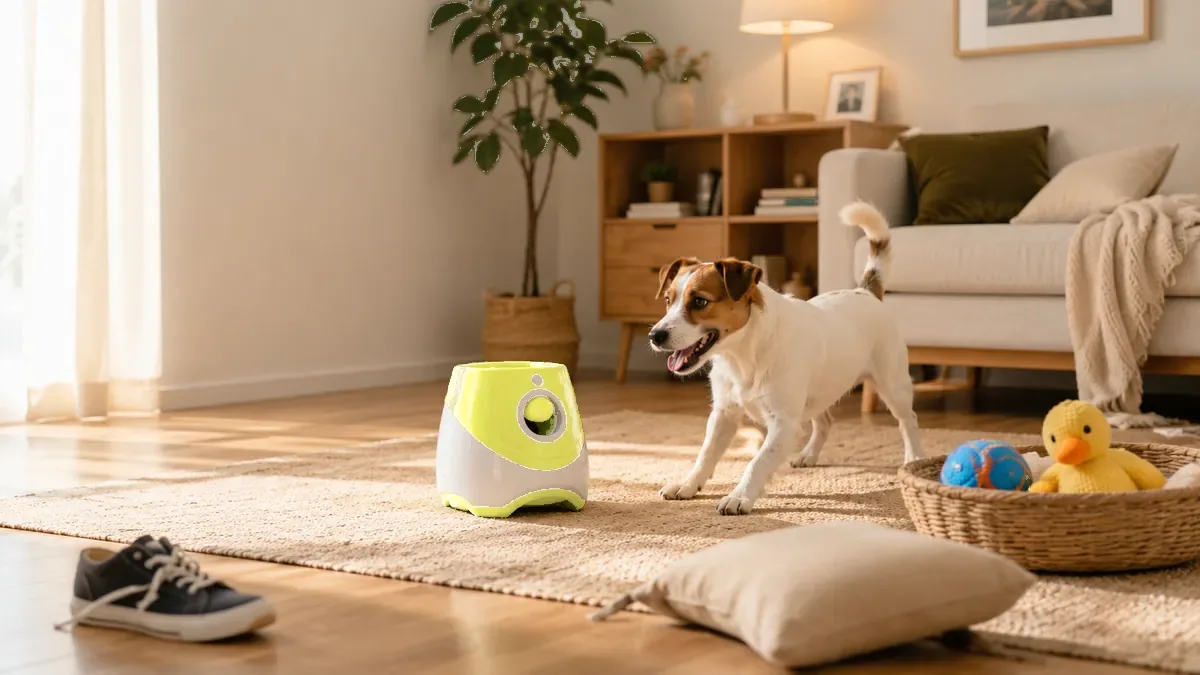
This is the thing that surprises owners of active dogs most. You lengthen the walks, you add an outing, you run with him — and the dog simply becomes fitter. Physical stamina can be trained; attention cannot.
Why it works, in two sentences
A running dog is performing a movement he has mastered. A searching dog has to inhibit his reflexes, sort information and hold his concentration on a task — three expensive operations. That is the expenditure that produces real behavioral satiety, the kind after which a dog settles and sleeps properly.
One caution, about a claim you will read everywhere as a tidy number: "ten minutes of sniffing is worth an hour of running." The direction is right; the precision is not. I have never found the study behind that figure, and I distrust equivalences that come out that round. What holds up is the observation: a dog who has searched settles, a dog who has run asks again.
Six exercises, from simplest to most demanding
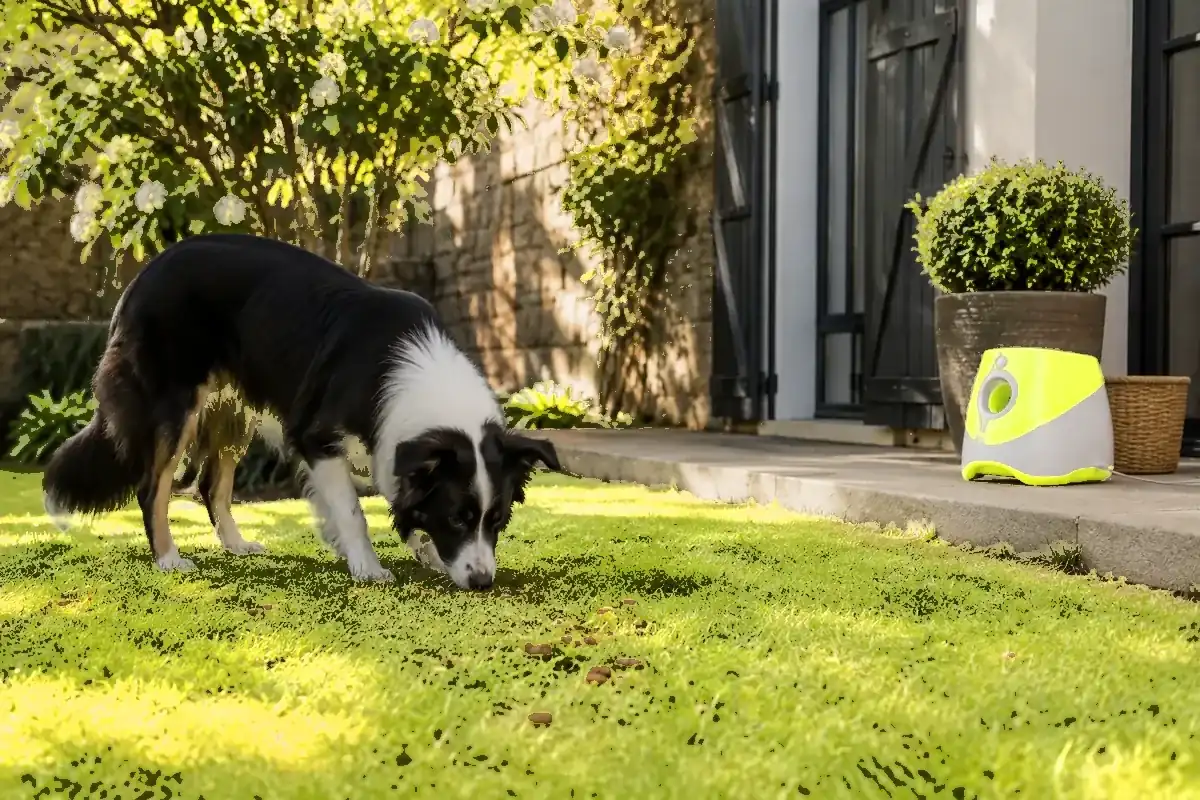
1. Dinner in the grass
The simplest one, and nobody does it. Instead of tipping the kibble into a bowl, scatter it across the garden or over a mat. The dog spends fifteen minutes searching instead of three minutes swallowing. A bonus: it slows down fast eaters, which is a genuine health issue in larger breeds.
2. The cup game
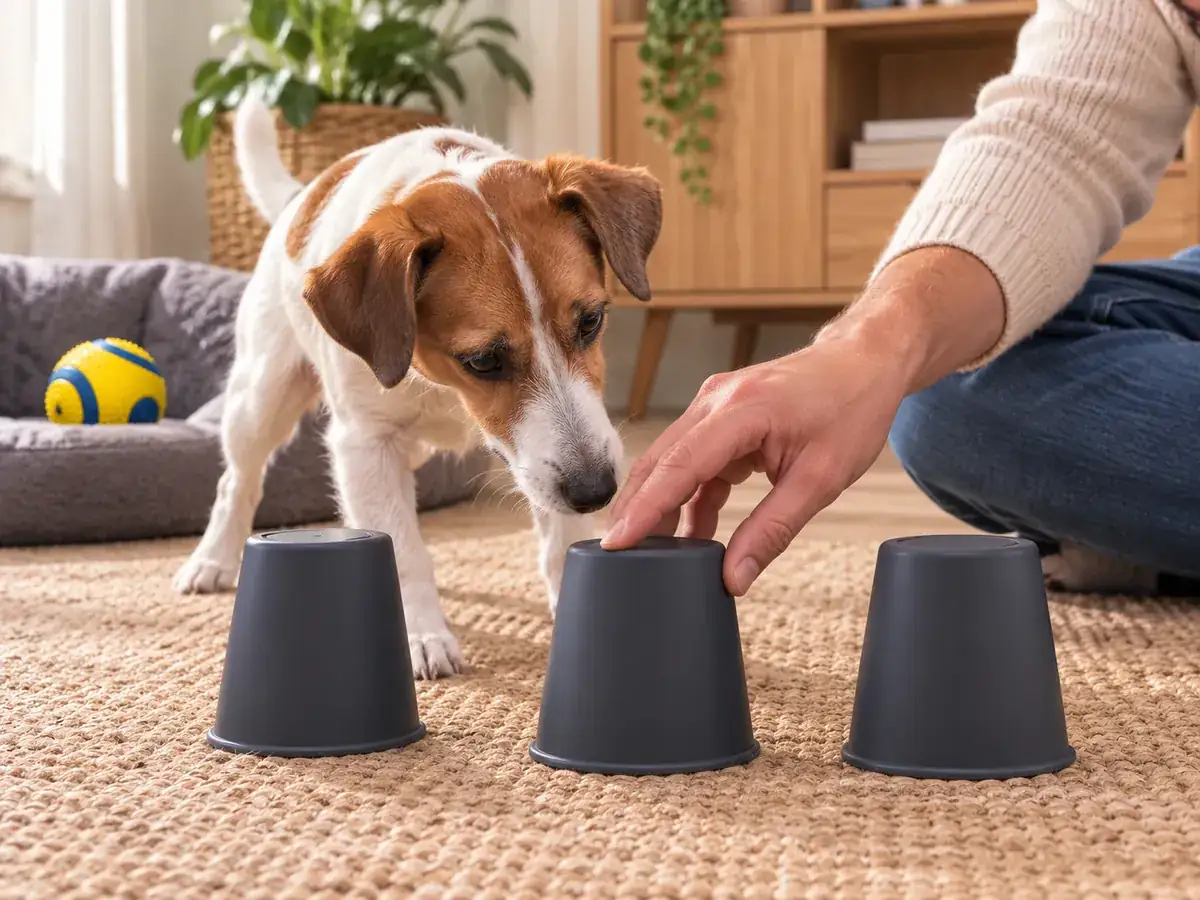
Three upturned cups, a treat under one of them, in full view of the dog. He has to indicate the right one — with his nose or a paw, it does not matter. Start by showing, then hide. The difficulty goes up when you shuffle the cups after hiding.
3. Finding a named object
Take one toy, always call it the same thing, and play with it for a week while repeating the name. Then put it ten feet away next to another object and ask for it. Many dogs manage this within days, and some learn several dozen names.
4. Waiting before the game
Underrated, and formidably effective. Ask the dog to stay put while you set the game up, and only release him on a signal. Inhibition is a considerable mental effort: three minutes of waiting is worth far more than people think, and you can see it on his face.
5. An improvised course
A chair to go round, a broom laid down to step over, a box to walk through. The dog has to read the environment and adjust his footing. Ten minutes is enough, and it works in a hallway.
6. Fetch with a rule
Fetch becomes mental the moment you add a constraint: only go on the signal, bring it back to a specific place, choose between two balls. That is exactly what an automatic launcher produces: the dog has to work out that the ball must go into the chute for the game to continue. That is not a reflex, it is reasoning — and buyer reports put it at anywhere from one day to a few, depending on the dog.
How long, and how often
| Type of exercise | Useful length | How often |
|---|---|---|
| Food searching | 10 to 20 min | Every meal if you can |
| Problem solving | 5 to 10 min | Once or twice a day |
| Inhibition, waiting | 2 to 5 min | Several times a day, in context |
| Fetch with a rule | 15 to 20 min | Once a day |
Always stop before boredom sets in, while the dog is still succeeding. A short session that ends well beats a long one that ends in confusion — and it is what makes him want to start again tomorrow.
What mental stimulation does not replace
It replaces neither the walk nor the run. A dog needs thirty minutes to two hours of daily activity depending on breed and age, and he needs to sniff, to explore and to meet others — three things that only exist outdoors. Mental work is added to that; it is not a substitute.
For an active dog in an apartment, the balance looks roughly like this: a proper walk in the morning, a physical session at the end of the day, and food searching at mealtimes. And if your dog chases the ball happily but will not give it back, that is a separate skill with a method of its own — how to teach a dog to fetch, and to let go.

Erin Delaney · Dog trainer, specializing in working off energy
Erin has spent twelve years working with companion dogs in cities, mostly active breeds living in apartments. She writes the Pupserve guides and reads every product page before it goes live.